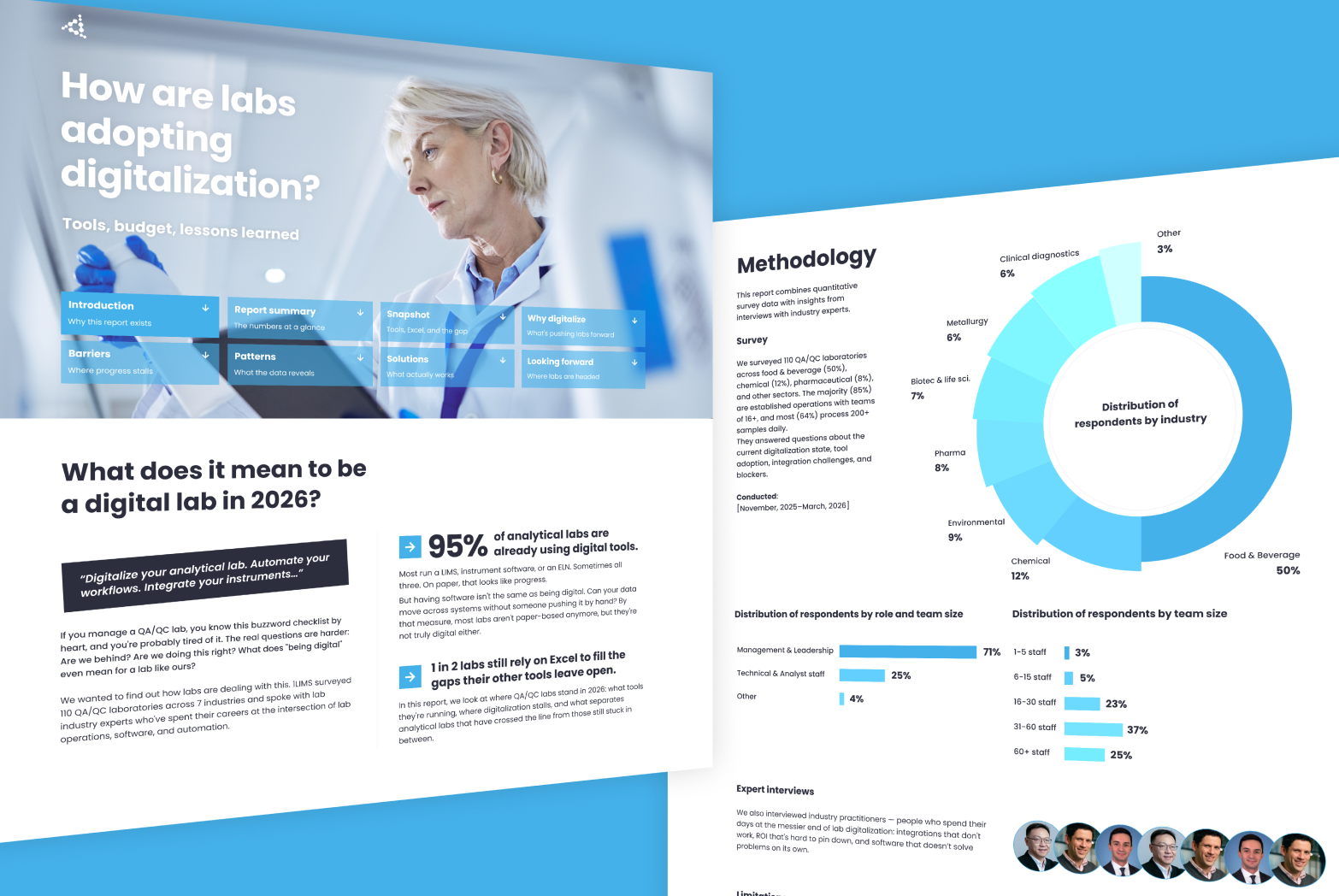
Artificial intelligence has stopped being a question of whether for quality control and quality assurance teams. In 2026, 47% of manufacturers report using AI in their quality processes, up from 33% a year earlier. The harder question is where it earns its place in a regulated lab, and where it quietly adds risk instead of value. This guide walks through both.

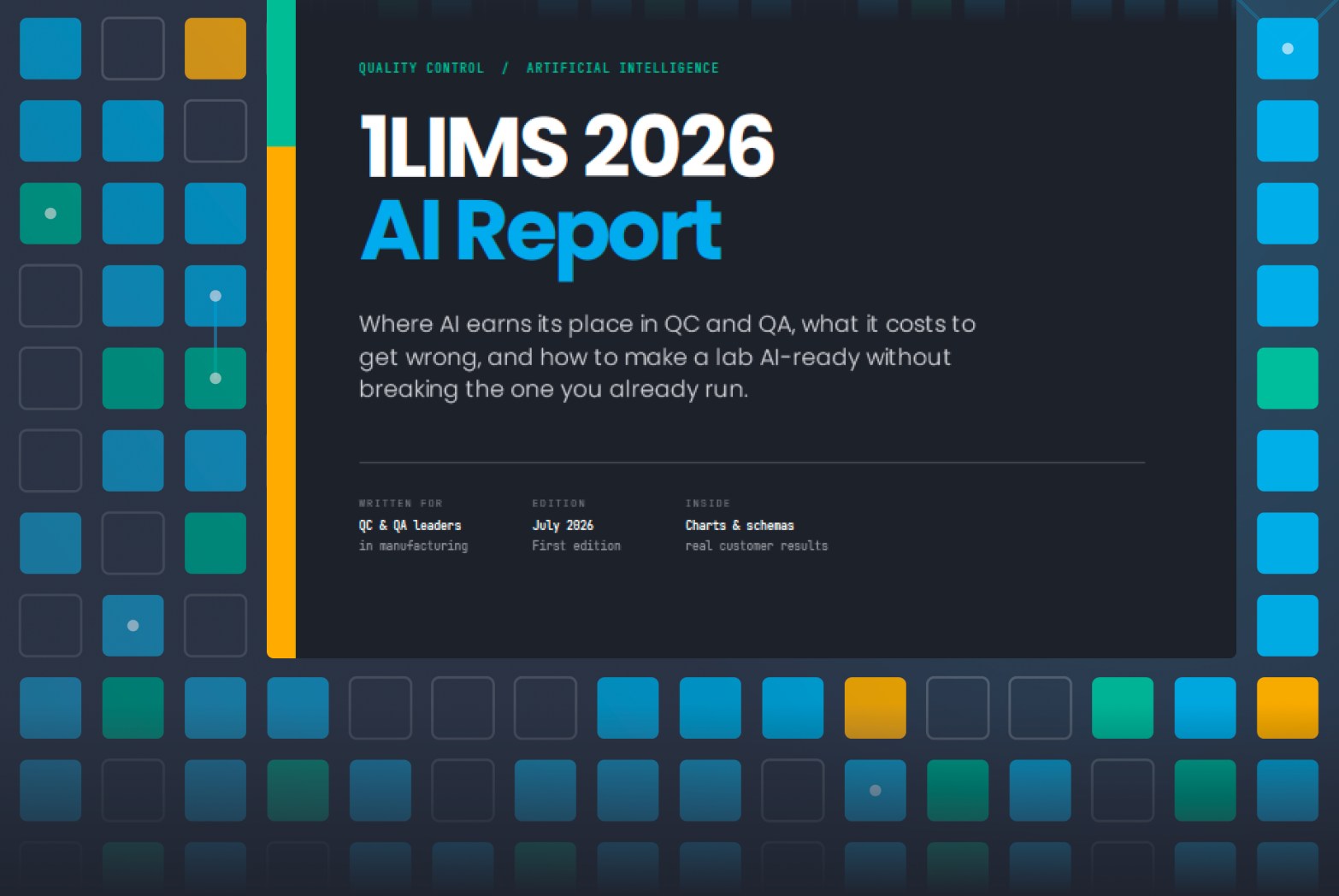

Strip away the noise and AI in a quality lab does three practical things: it reads unstructured information faster than a person can, it spots patterns across more data than a person can hold in their head, and it drafts routine output for a person to review. None of that replaces the analyst. It shortens the distance between what your lab already knows and what it can act on.
That framing matters, because it separates the use cases that hold up in a regulated environment from the ones that get a lab into trouble. The useful applications sit next to a qualified decision-maker; the risky ones try to replace them.
Across food and beverage, materials testing, and environmental labs, the same eight applications come up again and again. Document automation leads adoption, reported by 48% of quality professionals, because the manual task it replaces is repetitive and easy to get wrong under time pressure.
Statistical process control has flagged single out-of-spec results for decades. What it misses is the slower story: a meter drifting over months, a raw material that behaves differently every autumn. AI reads the whole history and surfaces an Out-of-Trend signal while a result is still in spec, so you can act before it becomes an OOS event.
Supplier certificates of analysis arrive as PDFs in a dozen layouts. AI extracts the values, checks them against your specification, and flags the mismatches, so your team stops re-keying numbers from someone else’s template.
When an out-of-spec result lands, AI can surface comparable past cases and their confirmed root causes, giving the investigator a running start instead of a blank form.
The rest round out the day: forecasting test volume to catch a bottleneck, answering “which method applies to batch X” from your SOPs, spotting instrument drift before an unplanned stop, drafting CoAs and trend summaries for review, and flagging incomplete records before an audit. The full report covers each with examples.
The pattern
Every use case that works keeps a qualified person in the decision chain. The AI reads, spots, and drafts. The analyst decides. That is exactly what holds up in front of an auditor.
Here is the uncomfortable number: only 39% of companies report any enterprise-level financial impact from AI so far. That is not a verdict on the technology. It is a reflection of how many organizations skipped the groundwork and went straight to the pilot. Around 73% of manufacturers name data as the point where their AI initiatives most commonly stall.
An AI model is only as reliable as the data it learns from, and lab data is frequently split across spreadsheets, paper worksheets, and systems that do not talk to each other. Point a model at that, and you get confident answers built on incomplete inputs, which in a regulated lab is worse than no answer at all.
Not all risks carry the same weight. The table below maps the main ones by how much damage they do when a lab moves before its data foundation is ready.
Read that middle column carefully. Almost every high-impact risk traces back to data and governance, not to the AI technology. Fix the foundation and you lower your biggest risks and unlock your biggest opportunities in the same move.
AI can absolutely be used in a regulated QC lab. But every AI component that touches a testing decision needs a validation strategy, the same way any other piece of GxP software does. The FDA’s 2025 draft guidance on AI in regulatory decision-making sets out a risk-based credibility framework: the higher the stakes of a decision the model informs, the more evidence regulators expect that its output can be trusted. ISO/IEC 42001, the first international standard for AI management systems, adds the expectation that you can explain what a system can and cannot do.
Practically, that means two things: keep the AI’s output explainable in language a reviewer can act on, and keep a qualified person accountable for the decision. Software supports these requirements; it does not remove your obligation to meet them.

The labs that get value from AI treat it as the last step of a data project, not the first step of a technology project. That is the whole idea behind the 1LIMS Methodology.
The bottom line
You don’t need data scientists to use AI in the lab. You need clean data, standardized workflows, and one well-governed pilot. Get those right and the technology becomes the easy part.
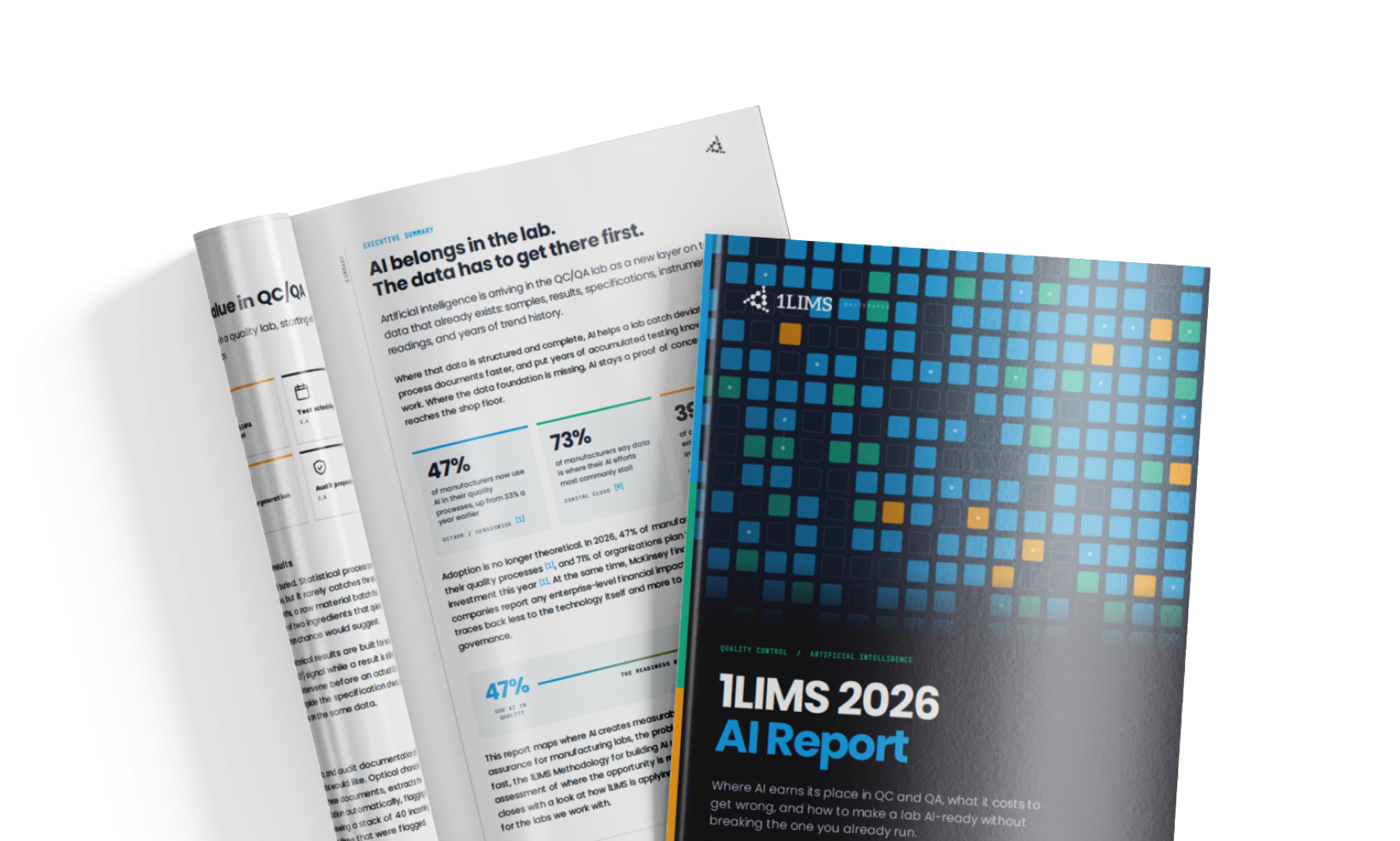
This article is the short version. The 1LIMS 2026 AI Report covers all eight use cases in detail, the full risk assessment, real customer results, and a self-check to score where your lab sits on the five steps.

Privacy is important to us, so you have the option of disabling certain types of storage that may not be necessary for the basic functioning of the website. Blocking categories may impact your experience on the website. More information