“Digitalize your analytical lab. Automate your workflows. Integrate your instruments…”
If you manage a QA/QC lab, you know this buzzword checklist by heart, and you're probably tired of it. The real questions are harder: Are we behind? Are we doing this right? What does "being digital" even mean for a lab like ours?
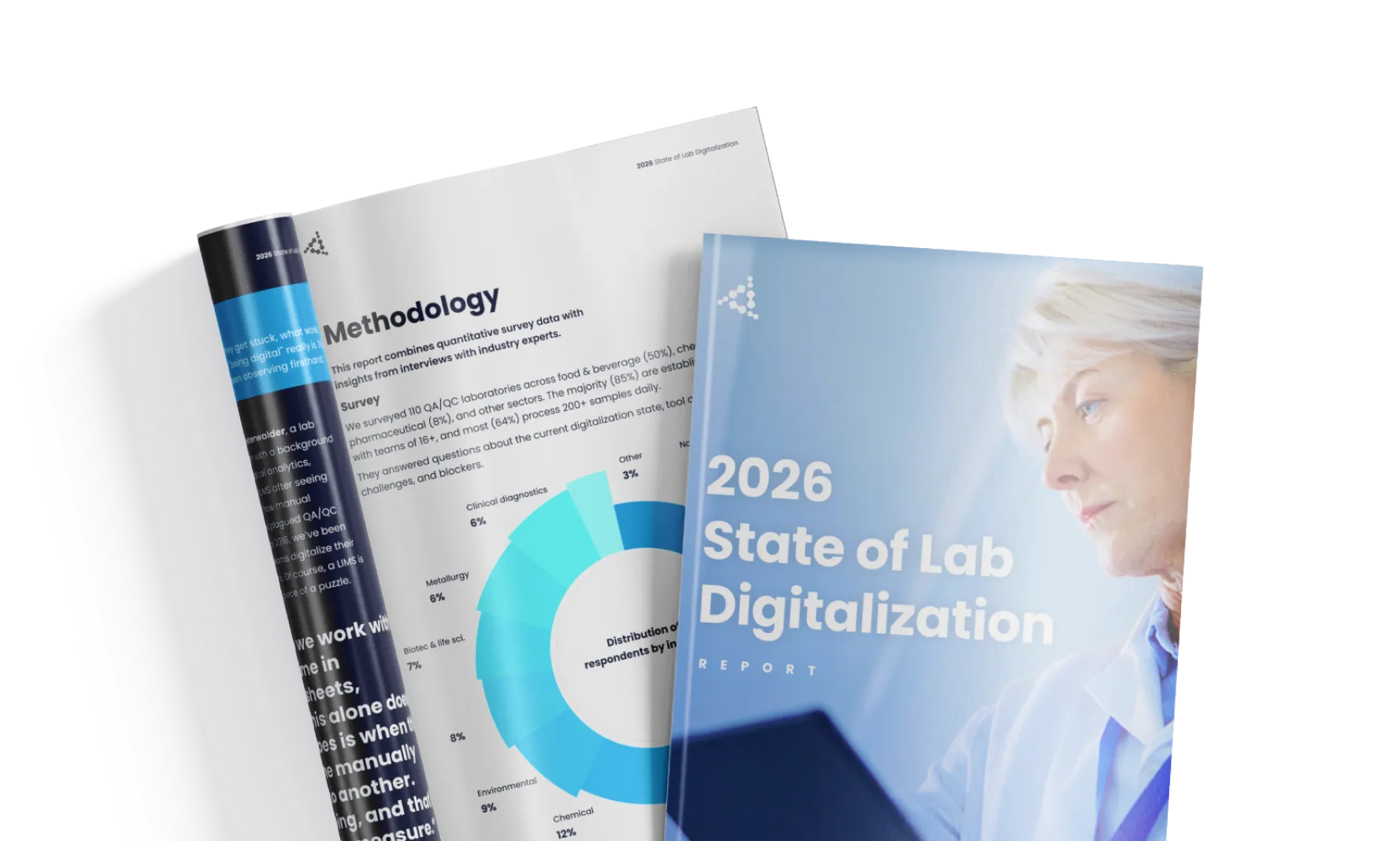
We wanted to find out how labs are dealing with this. 1LIMS surveyed 110 QA/QC laboratories across 7 industries and spoke with lab industry experts who've spent their careers at the intersection of lab operations, software, and automation.
95%
of analytical labs are using digital tools.
Most run a LIMS, instrument software, or an ELN. Sometimes all three. On paper, that looks like progress.
But having software isn't the same as being digital. Can your data move across systems without someone pushing it by hand? By that measure, most labs aren't paper-based anymore, but they're not truly digital either.
1 in 2 labs still rely on Excel to fill the gaps their other tools leave open.
In this report, we look at where QA/QC labs stand in 2026: what tools they're running, where digitalization stalls, and what separates analytical labs that have crossed the line from those still stuck in between.
Note from 1LIMS
We work with QA/QC labs every day and see where they get stuck, what works, and how big the gap between "having software" and "being digital" really is. This report is our attempt to put numbers to what we've been observing firsthand.
Philipp Osterwalder, a lab technician with a background in biomedical analytics, founded 1LIMS after seeing firsthand how manual processes plagued QA/QC labs. Since 2016, we’ve been helping teams digitalize their operations. Of course, a LIMS is only one piece of a puzzle.
“Every analytical lab team we work with has invested money and time in something: a LIMS, spreadsheets, instrument software. But this alone doesn't make a lab digital. What does is when the data flows without someone manually pushing it from one place to another. That's the gap we keep seeing, and that's what this research set out to measure.”
Methodology
Methodology
This report combines quantitative survey data with insights from interviews with industry experts.
Survey
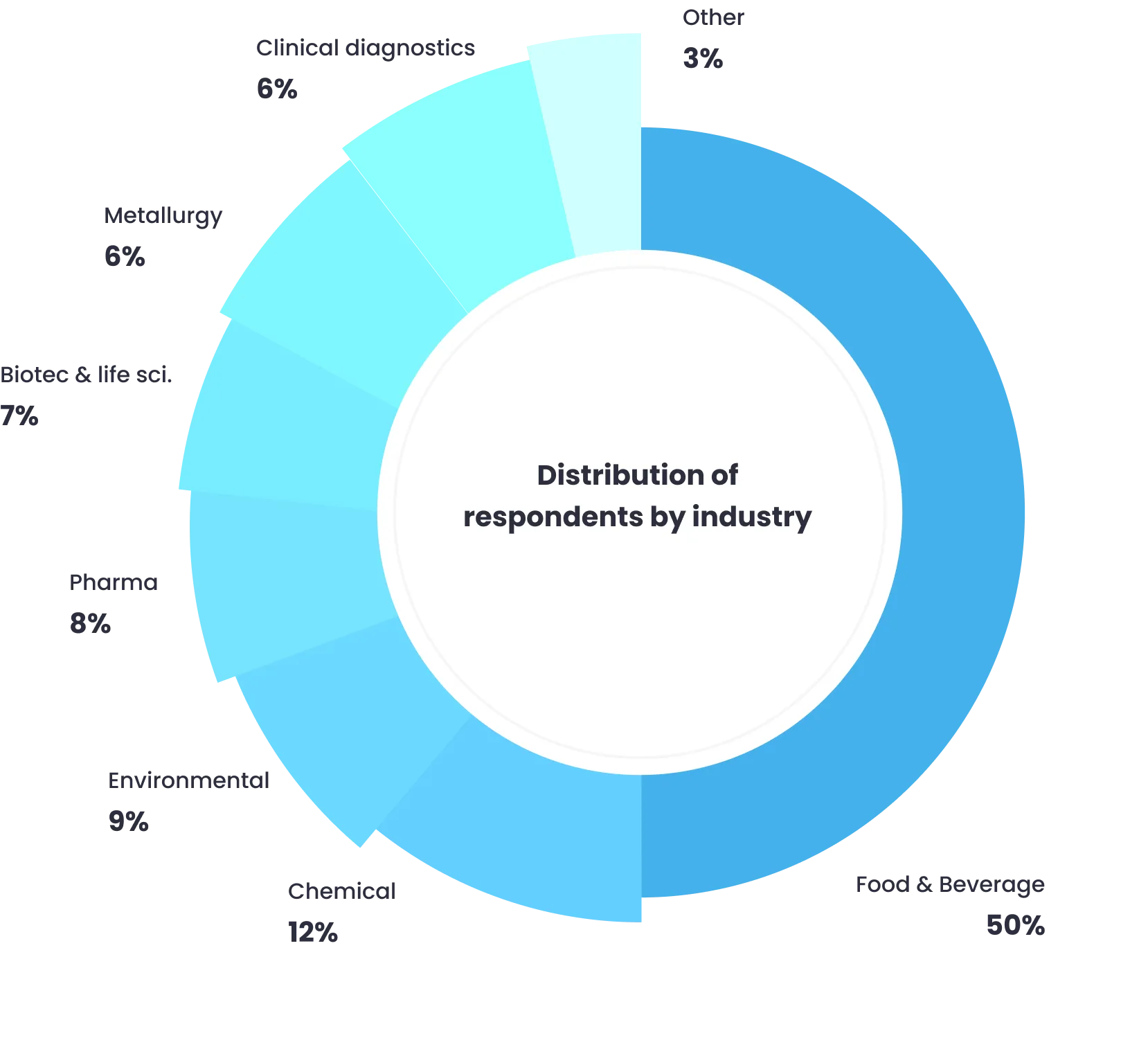
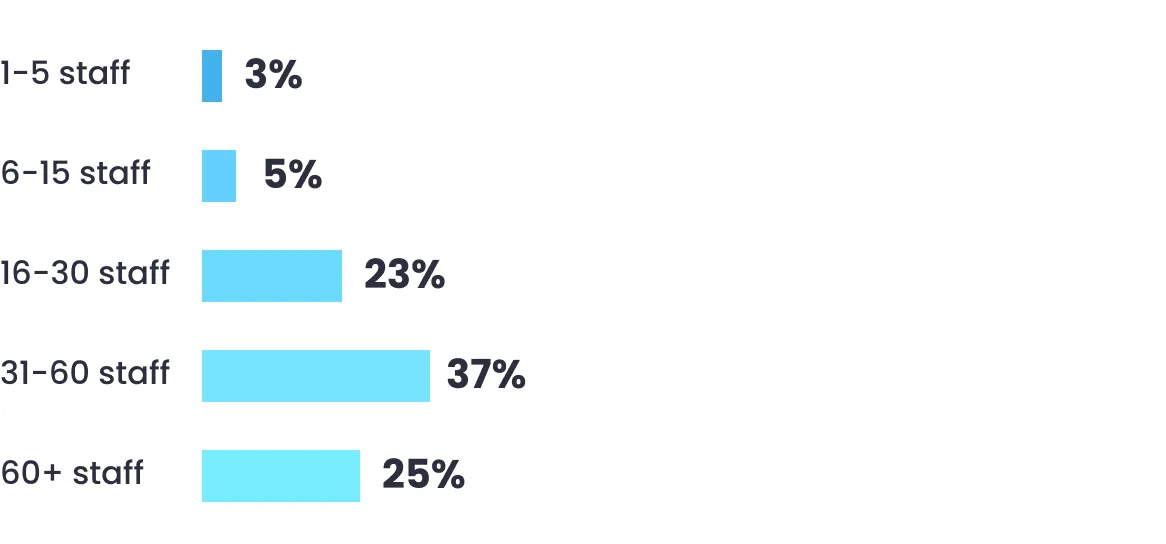
We surveyed 110 QA/QC laboratories across food & beverage (50%), chemical (12%), pharmaceutical (8%), and other sectors. The majority (85%) are established operations with teams of 16+, and most (64%) process 200+ samples daily.
They answered questions about the current digitalization state, tool adoption, integration challenges, and blockers.
Conducted: November, 2025–March, 2026
Distribution of respondents by role and team size
Distribution of respondents by team size
Expert interviews
We also interviewed industry practitioners — people who spend their days at the messier end of lab digitalization: integrations that don't work, ROI that's hard to pin down, and software that doesn’t solve problems on its own.
Gerard Ipskamp, LIMS selection and implementation consultant
Burkhard Schäfer, Splashlake, Lead architect of the AnIML data standard
Lukas Bromig, Founder & Co-CEO of UniteLabs
Patrick Courtney, Board Member at SiLA
Dr Phil Williams, LIMS expert at LIMS4U
Limitations
Sample size: 110 responses are not statistical proof.
Geographic skew: The majority of participants are based in Europe. Results may reflect European regulatory dynamics.
Analytical lab size bias: 85% work in labs with 16+ staff. Smaller labs may face different realities.
Self-selection: Participation was voluntary. Lab teams already thinking about digitalization may have been more likely to respond.
Summary
2026 QA/QC lab digitalization: Key findings
Analytical Labs aren't paper-based, nor automated. They're digitally assisted. Full integration of software and instruments is rare.
8 in 10 labs
either run a LIMS or plan to. Connecting it to everything else is where most struggle.
Only 11% of labs
say their instruments and software are fully connected.
1 in 3 labs
that run a LIMS still rely on Excel daily.
Just 21% of labs
consider themselves fully digital. 74% are either ‘hybrid’ or ‘mostly digital’.
Budget ranks last at 7%.
Top barriers: regulatory constraints, staff resistance, data integration.
48% of labs
cite data integrity and compliance as #1 priority for the next 12 months.
SNAPSHOT
Digital…on paper?
Labs tend to overestimate their level of digitalization.
Ask them directly, and 1 in 5 will tell you they're fully digital — connected and automated. But of those same labs, only half have their instruments and software actually talking to each other. The other half still moves data by hand.
How digital do labs think they are?
% of labs surveyed, by self-reported digitalization level
In reality, only half have zero manual data transfer
Most analytical labs are somewhere in the middle.
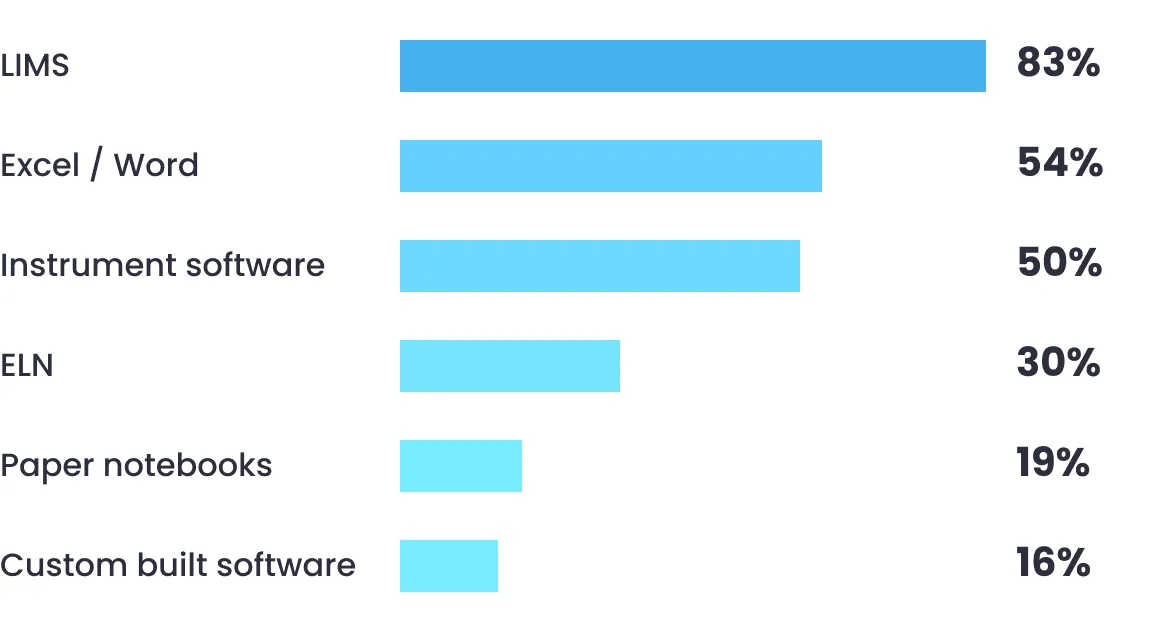
74% describe themselves as either hybrid or mostly digital. In practice that means: the tools are there, but they don't connect.83% of labs run a LIMS and just half use an instrument software. Yet, Excel is in the picture for more than half of them, sitting alongside it rather than being replaced by it.
A third of labs say getting off Excel is a priority this year. Because clearly, having dedicated lab data management tools isn't the same as being digital.
Tools currently in use
% of all labs
These tools aren’t mutually exclusive...
e.g. almost half of labs that run a LIMS still open Excel every day to get work done
WHY DIGITALIZE
What is pushing analytical labs forward
Digitalization isn’t about “using software.” Labs have done that for decades. It’s about whether data can move, connect, and be traced during audits. Four forces are pushing analytical labs forward:
Market access
If you want to supply pharma, food retail, or any regulated customer, integrated and traceable data is your entry condition.
Rising compliance bar
Regulations evolve slowly. Expectations don’t. Manual processes become harder to justify once more peers digitalize.
Operational scale
2 in 3 analytical lab teamss process 200+ samples a day. At that volume, the only way to keep up without adding headcount is to automate.
Future-proofing
Your data needs to be ready for AI. If it’s still scattered across spreadsheets, you're not behind yet, but you will be in a few years.
Burkhard Schäfer, Splashlake, Lead architect of the AnIML data standard, stresses that digital maturity isn’t about having software.
“The real question is whether your data can move, connect, and be reused across systems.”
Labs aren't chasing cost savings or headcount reduction – those rank last. What they prioritize is better quality, faster decisions, and less compliance risk. So they invest, they set up integrations…and still find themselves stuck in a hybrid mode.
What ROI labs expect from digitalization
% of all labs surveyed
44%
Reduce errors and improve quality
38%
Speed up decision-making
37%
Decrease compliance risk
36%
Process more samples
27%
Save time by reducing manual work
Barriers
What keeps labs stuck
Money isn't the issue.
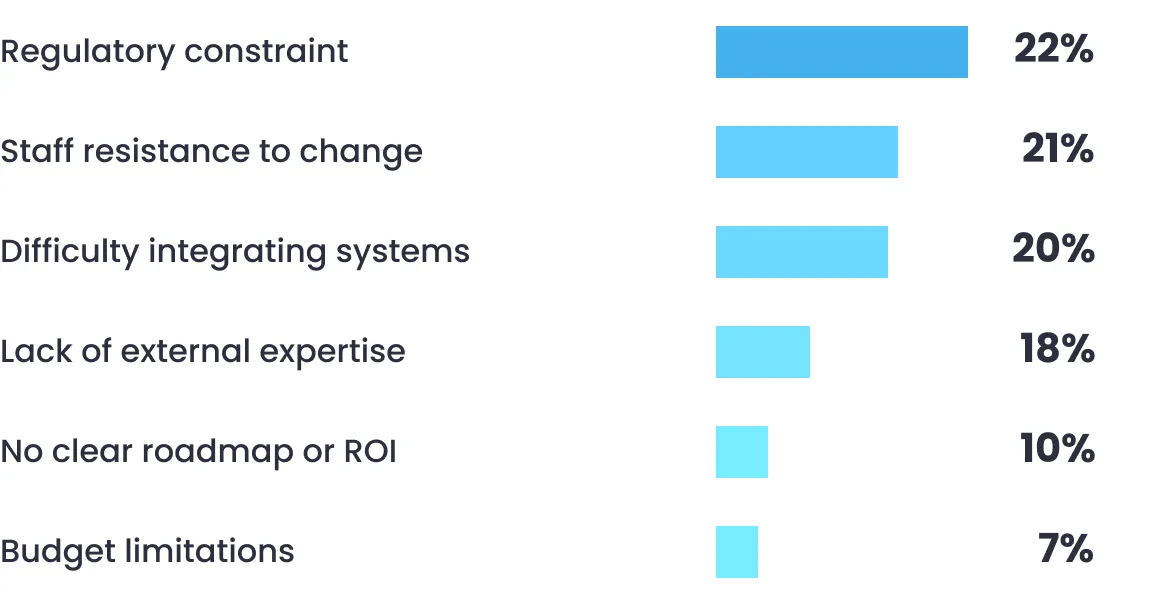
When we asked lab teams what's preventing them from automating further, budget came last, cited by just 7% of respondents. Instead, the biggest blockers are regulatory constraints, staff resistance, and difficulty integrating systems — they're clustered remarkably close together at the top.
What prevents labs from automating faster?
% of labs citing each as a barier
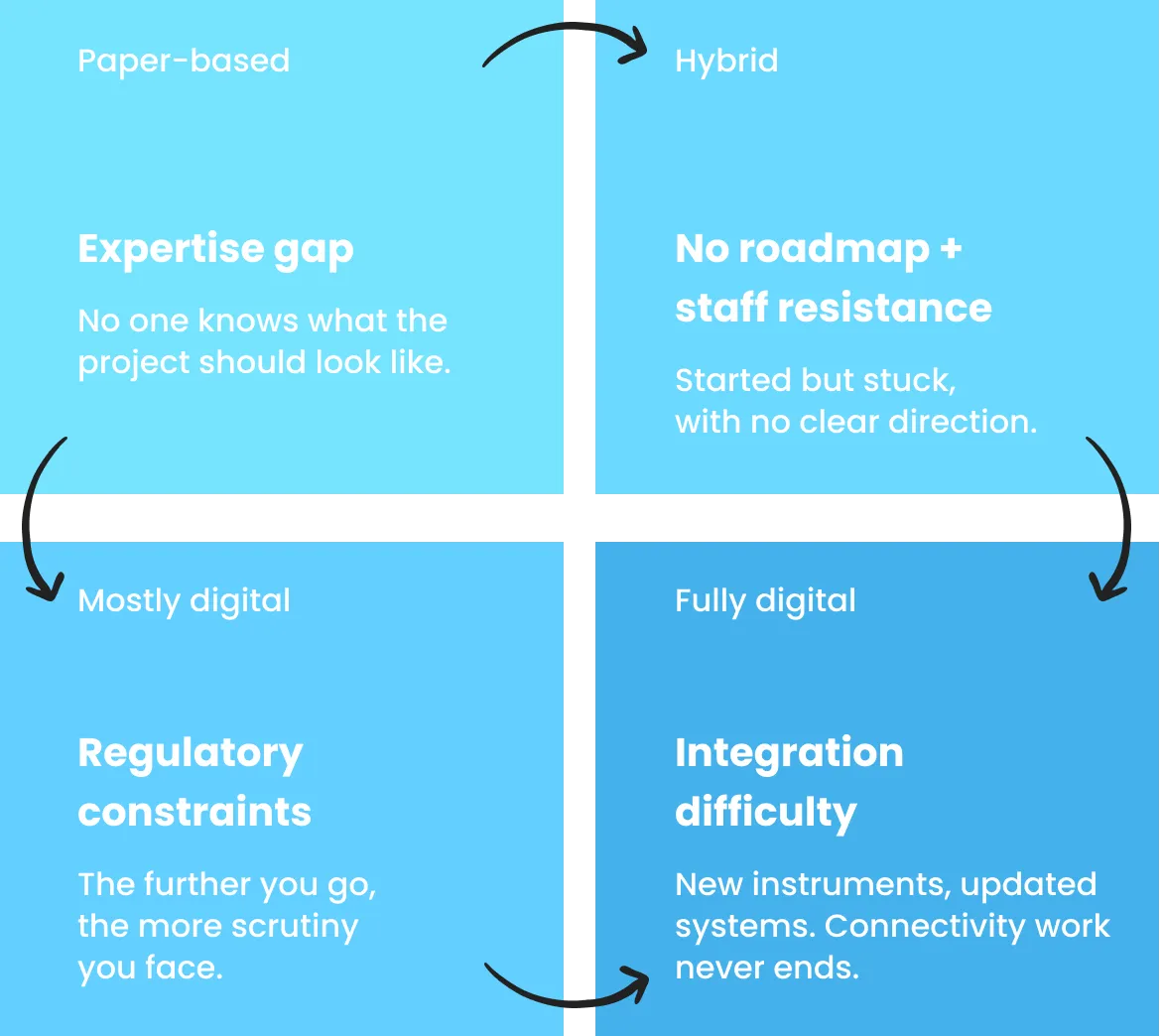
But when we look at labs by digitalization level, each group has its own top barrier.
The barrier changes as you advance
“Buying the software is the easy part. Getting it configured to your processes is where things get hard.”
Patrick Courtney, Board Member at SiLA, highlights the cost most budgets never account for:
Connectivity is the problem no one budgets for and nearly everyone hits.
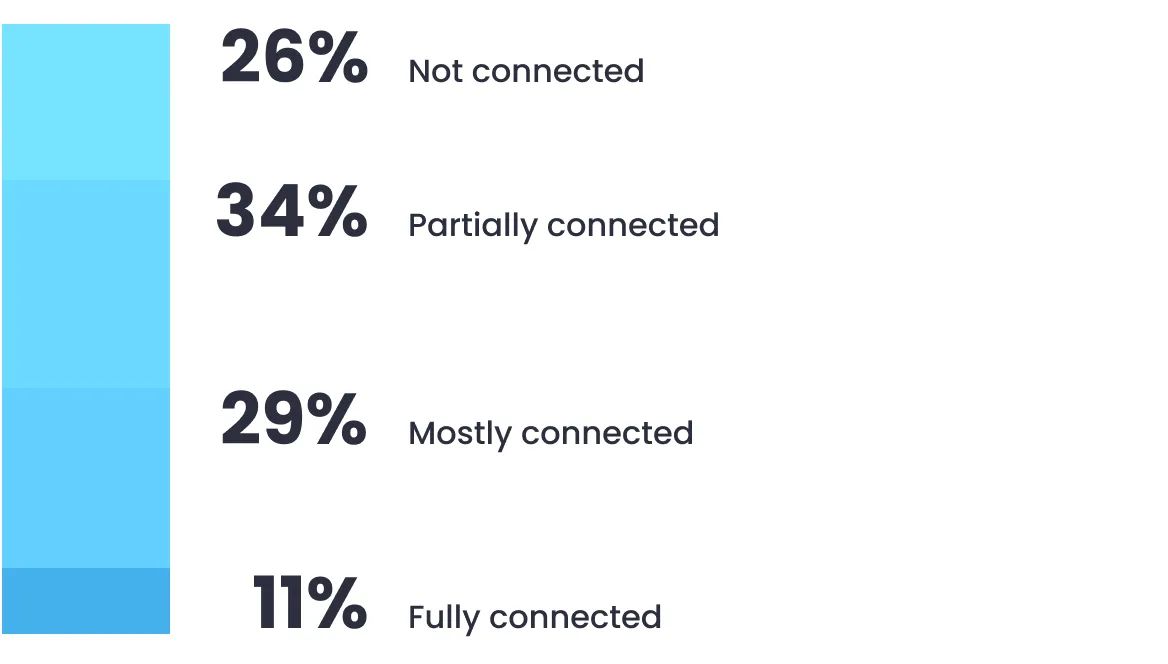
Only 1 in 10 labs surveyed have their instruments and software fully integrated. The rest are somewhere in the middle, or not connected at all.
How well are instruments and software connected?
% of labs surveyed, by integration level
It's not hard to see why. A typical analytical lab isn't running one system from one vendor. It's a titrator from one company, a mass spectrometer from another, a balance from a third. None of them naturally talk to each other, let alone to the LIMS. Every connection has to be built from scratch. And when something changes (a new instrument, a software update, a LIMS migration), someone has to rebuild it.
The answer the lab industry is working on: open data standard.
SiLA1 governs how software communicates with instruments in real time. AnIML2 governs the format of analytical data itself — so a result from any compatible instrument can be read by any compatible system, without a custom bridge. Together, they're doing for lab systems what USB did for consumer electronics.
Burkhard Schäfer, Splashlake, Lead architect of the AnIML data standard, points to the data silos challenge:
“The systems labs use every day — instruments, workflow tools — each speaks its own language. Labs are left dealing with this disconnection on their own.”
That said, when you're evaluating a new lab data management system, the question to ask is simple:
Does this vendor support open standards like SiLA and AnIML, or do they only connect through their own proprietary methods?If it's the latter, every future integration is a custom project.
1 Standardization in Lab Automation (SiLA) — an open standard for real-time communication between lab instruments and software. ² Analytical Information Markup Language (AnIML) — an ASTM XML standard for analytical chemistry and biological data that defines a common file format for instrument results.
PATTERNS
Most analytical labs have a LIMS. Most are still stuck
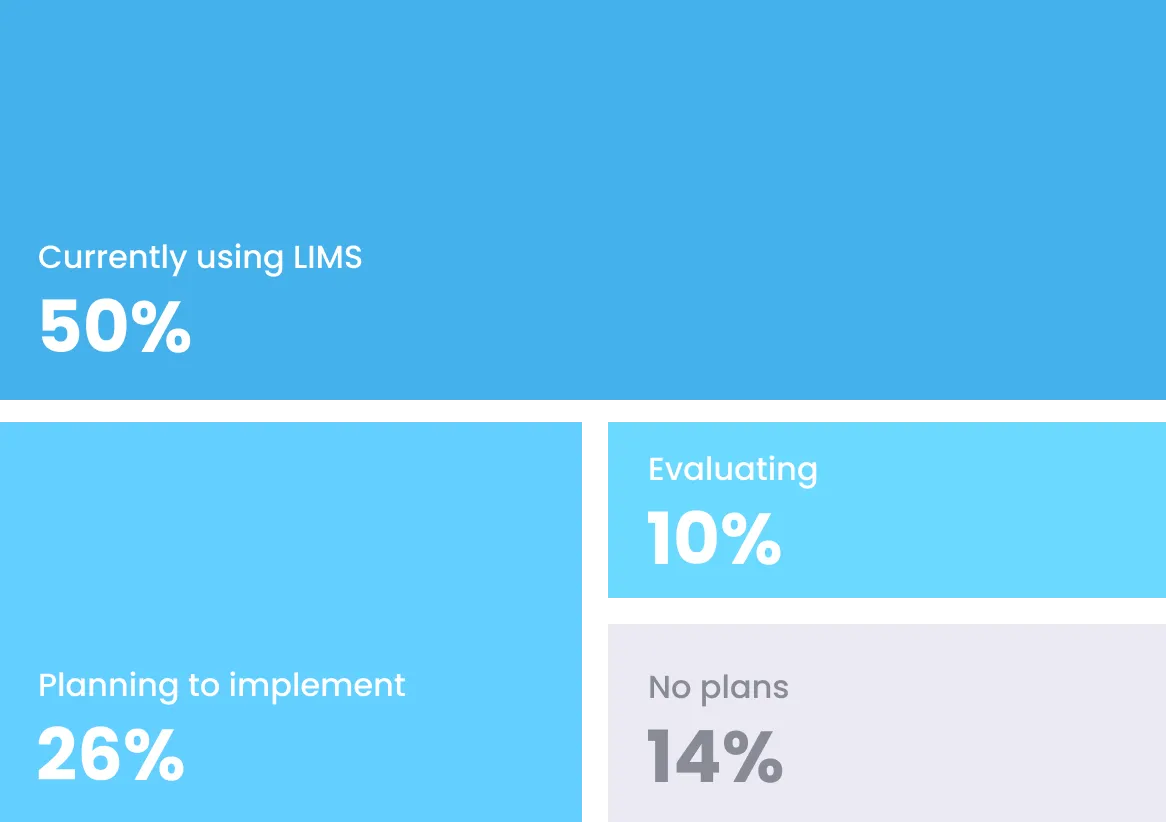
8 in 10 labs in our survey are either running a LIMS or actively planning to. Connecting it to everything else in the lab is where most stumble.
How widespread is LIMS adoption?
% of labs surveyed, by current LIMS status
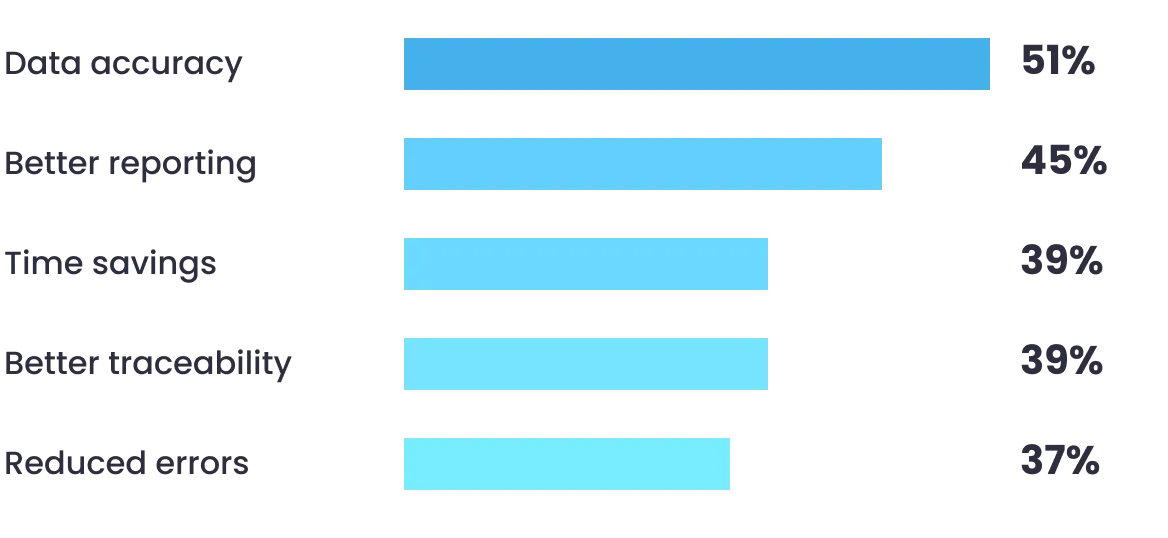
What LIMS delivers
% of LIMS users citing each benefit
Why labs haven’t started
Don’t know where to start
Leadership hasn’t prioritized it
Hard to build a business case
No internal expertise
2 in 3
labs with a LIMS have integration gaps: their instruments and other systems aren't fully connected to it.
Excel survives all the way
For a long time, Excel was the only practical way to bring data from different instruments and systems into one place. Copy, paste, calculate, repeat. It worked. And because it worked, it stayed.
More than half of labs still use Excel for day-to-day work. Having lab data management software doesn't change that much: 1 in 3 LIMS users still run Excel alongside it, and 20% still crunch numbers there by hand. 37% say getting off Excel is on their list for the next 12 months — they're aware it's holding them back. Old habits die hard, though.
1 in 3
of all labs still crunch numbers in Excel by hand
54%
of labs surveyed use Excel – second most common tool, just behind LIMS
33%
of labs that already have a LIMS still run Excel alongside it
37%
of labs want to reduce their reliance on Excel in the next year
While Excel is no longer the main system, it's become the lab's glue. The most common manual processes in our survey — reporting, data transfer from instruments, sample registration — are exactly the tasks Excel gets pulled in to handle when systems don't connect.
Until those connections exist, Excel stays.
Human judgement stays manual
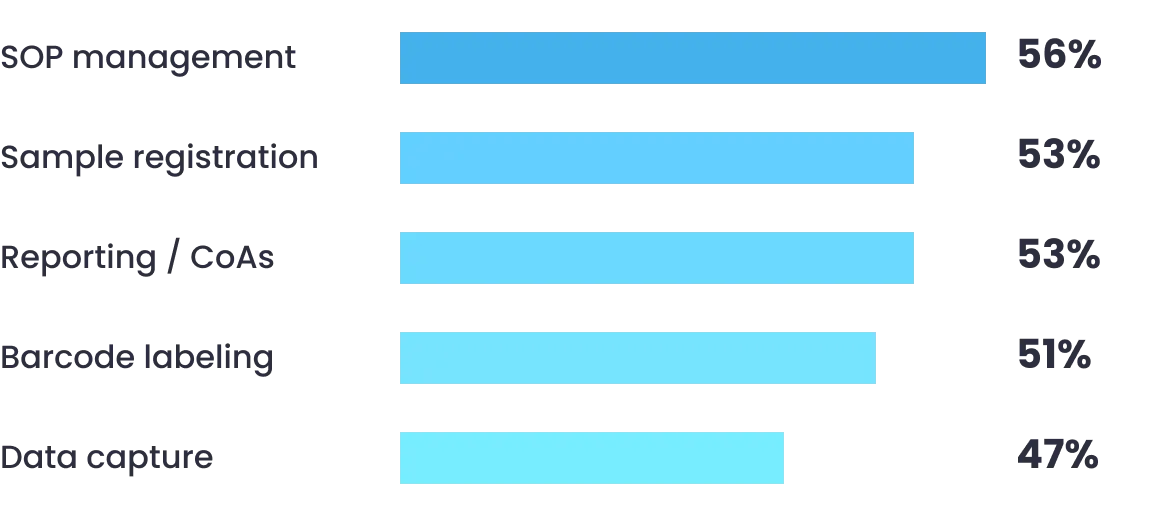
When analytical labs digitalize, they tend to start with the procedural parts. Data capture, sample registration, barcode labeling, SOP management: more than half of labs have digitalized each of these. In fact, SOP management leads at 56% for all industries, with pharma furthest ahead at 89%. Meanwhile, sample registration is the only process that appears on both lists: for some labs it's handled digitally, and for others it's still done by hand.
What processes are digitalized?
% of labs that digitalized this process
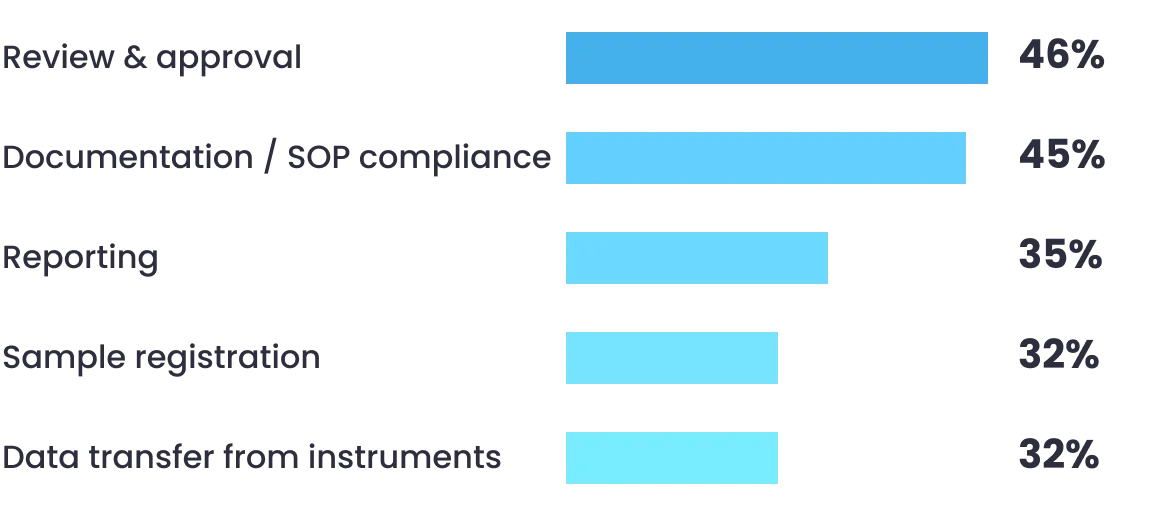
The tasks that stay manual are almost always where someone has to make a call: a review, a sign-off, a compliance decision. A system can flag an anomaly, but it can't own the consequence of missing one. The human always needs to be there, checking and being sure. That's not a limitation of current technology, but what regulated work calls for.
What processes stay manual?
% of labs that do this process manually
By industry
Review & approval is the top manual process across every sector - pharma, F&B, chemical, environmental
89%
of pharma labs have digitalized SOP management
42%
of F&B labs cite data transfer from instruments as their top manual process
SOLUTIONS
A smarter path to digitalization
Getting digitalization right is less about which tools you buy and more about how you approach them. Here are five principles from practitioners who've done it.
Make the problem visible before you ask for budget
Getting buy-in for a digitalization project is often harder than the project itself. Gerard Ipskamp advises going beyond the business case: “Find the problem and don't solve it. Make it visible instead. Once the right people feel it, the budget conversation takes care of itself.”
Gerard Ipskamp, a LIMS selection and implementation consultant with 20+ years of experience, has watched many projects being blocked or extended in time. His diagnosis:
“Most projects fail from too much discussion about what to implement. You have to know what your processes are before the vendor is in the room.”
Map your process before you touch the software
Labs that call vendors before they understand their own workflows are setting themselves up for months of expensive debates. Mr. Ipskamp stresses that before any vendor conversation, your processes need to be documented — and run the way you actually intend them to. Simply put, you must understand how you work before you can describe what you need.
Choose configurable systems
Not every lab needs the most powerful system on the market (is there even one?). Dr Phil Williams, a LIMS expert at LIMS4U, puts it plainly: “You want a system that's configurable above all else, not just feature-rich.” Two questions worth asking in any vendor call: can a non-technical user make a change themselves? Are the interfaces open and accessible, or will every new connection require custom development?
A note on change management
Start small, prove value, scale.
The biggest obstacle to digitalization is often the people — lab staff who've worked the same way for years don't welcome change.
Start with the most frustrated person in your lab instead. Run a pilot with people who actually want it to work. When the rest of the team sees the results, they'll ask for more.
“Lab staff are often frightened by automation. But given the chance to engage with it on their own terms, most come around.”
Dr Phil Williams, a LIMS expert at LIMS4U
Know your architecture before you commit
Most analytical labs only realize they needed a system design conversation after their new tool is in and won't connect to anything else. By then, changing courses is expensive. The question was never which software to buy, but where one tool's job ends and another's begins.
Lukas Bromig, Founder & Co-CEO of UniteLabs, on what to do before that happens:
“Get software engineering expertise - whether in-house or via a specialist consultant. Otherwise, you won't understand the boundaries of your tool.”
Do not skimp on data integration
Your data needs to be ready before the technology that needs it arrives. That means knowing what data you have, where it lives, and whether anyone can access it without doing it by hand. Burkhard Schäfer, lead architect of the AnIML data standard, stresses that labs still working around disconnected systems today will have a much harder time catching up when AI tools become the norm.
Looking forward
Analytical Labs are laying the groundwork
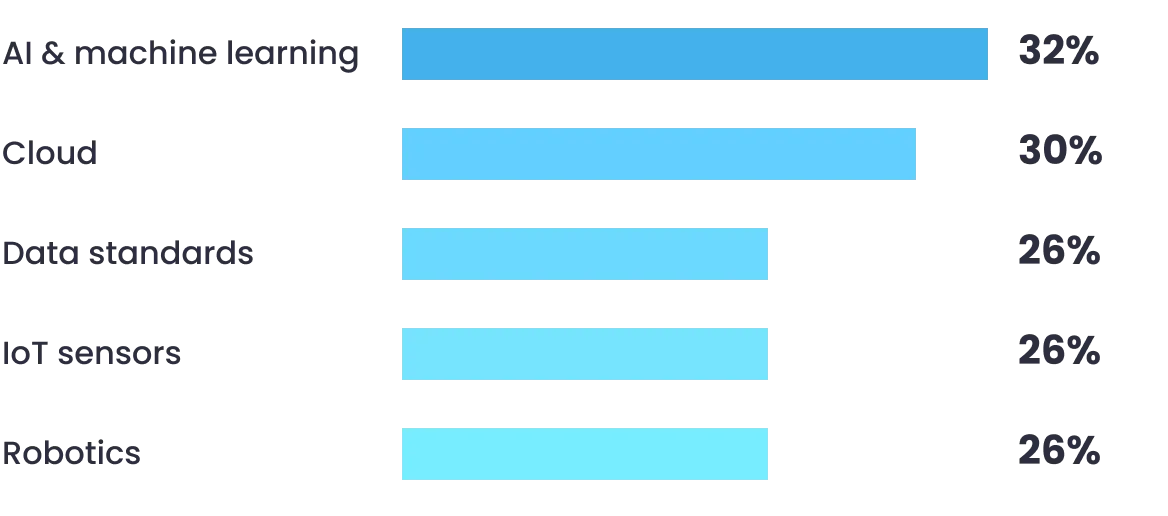
The things labs expect to matter most in the coming years — AI, cloud, data standards, IoT, robotics — sit within a few percentage points of each other.
Yet, what labs are focused on right now is more concrete. Nearly half say data integrity and compliance is their top priority for the next 12 months. Clean, traceable, connected data is what makes any of those technologies actually usable. You can't run AI on data that lives separately. And sorting that out? It's what actually helps make a lab digital, not just digitally equipped.
48%
labs say that data integrity and compliance is their #1 priority for the next 12 months
What labs expect will matter the most
% of labs citing each as having the biggest future impact
Most labs in this report are already partway there. The tools exist, the intent is there, the barriers clear. What remains is the harder work — getting data to actually flow between the systems that are already in place.
1LIMS was founded in Zurich in 2016 by Philipp Osterwalder, a lab scientist who moved from pharma into food manufacturing and found quality teams still running on paper, Excel, and disconnected spreadsheets. 1LIMS is built to fix that. Today, the software helps international manufacturing and service labs across various industries, like food and beverage, to digitalize and automate their work. Most labs are up and running with 1LIMS within a month and reaping results. Micarna processes 50% more samples than before. Zweifel eliminated lost samples entirely. Polygal went from hours of data analysis to minutes. Find out what's possible for your lab at 1lims.com