Most lab digitalization projects fail before the technology even matters.
Here’s a sad, but true story 👇
A European food producer decided to “fully digitalize” their QC lab. The goal sounded right: more automation and fewer manual steps.
But once the implementation started… everything fell apart. Why?
Because the lab wasn’t ready. Their processes were still paper-heavy and chaotic. Critical data lived in Excel files, handwritten notes, and inconsistent SOPs.
And when the project team tried to map workflows, nobody could clearly answer:
❓ How data enters the lab
❓ How results move back to production
❓ Where delays and duplication happen
❓ Where errors are introduced
You won’t automate the process you can’t even describe.
The project was paused. They had to go back to basics and rebuild their workflows so they could be digitalized.
And this company is not an exception. It’s the pattern.
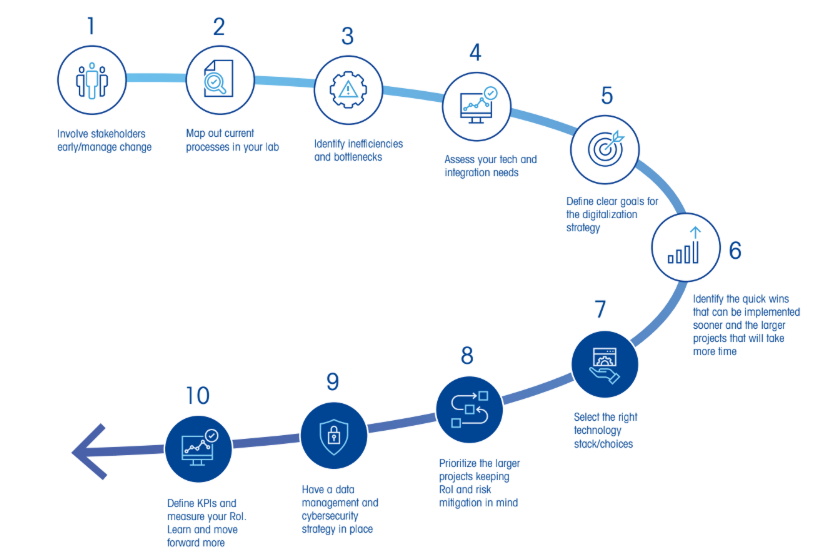
Because companies think digitalization begins with a system. But technology is not step one. In reality, it’s closer to step seven.
Real lab digitalization starts earlier with process maturity, people alignment, and data clarity. Without those foundations, even the best LIMS will digitize chaos faster.
Before you think about choosing a LIMS or automation platform, you need to establish the foundation:
Bring lab staff, lab managers, QA, and production into the conversation early. This helps surface real issues between the lab and the factory floor.
Document how workflows today, from sample intake to results and reporting.
Look for unnecessary steps, duplicate work, manual transcription, and points where errors or delays are introduced.
Understand what systems you already use and how data should move without manual intervention.
Agree on what you want to achieve: faster turnaround, better traceability, fewer manual steps, improved compliance, or freeing up staff time.
Identify improvements that can be made immediately, and larger changes that require more time, planning, and investment.
At this point, the system isn’t there to define how your lab works. It’s there to support workflows you already understand and agree on.
When those early steps are skipped, projects almost always:
❌ Take longer than planned
❌ Cost more than expected
❌ Stall after go-live
❌ Or quietly get abandoned
Together with METTLER TOLEDO, we co-developed a practical whitepaper to help food & beverage labs build a realistic path to a fully digital lab.
Inside, you’ll learn:
🔍 Why labs struggle with digitalization
🧱 What needs to be in place before automation works (processes, people, data)
🧭 A digital strategy framework that works in real labs
🚫 How to avoid the “LIMS first” trap that derails so many projects
🛠️ What to fix before touching any technology
🏭 Real-world examples from food & beverage QC labs
It's one of the clearest, most practical guides F&B labs can use to plan digital transformation without wasting time or budget.
At 1LIMS, we see this pattern very often.
Labs reach out to us asking for a LIMS demo. But when we dig deeper, we discover they're not ready for implementation yet. And we tell them that. Even though it delays our own sale.
Why? Because our CEO, Philipp Osterwalder, started his career as a lab technician. He knows how labs really operate, not how they "should" operate in vendor presentations.
That experience taught us that technology can only amplify what's already there. If your processes are broken, automation will break them faster and more expensively.
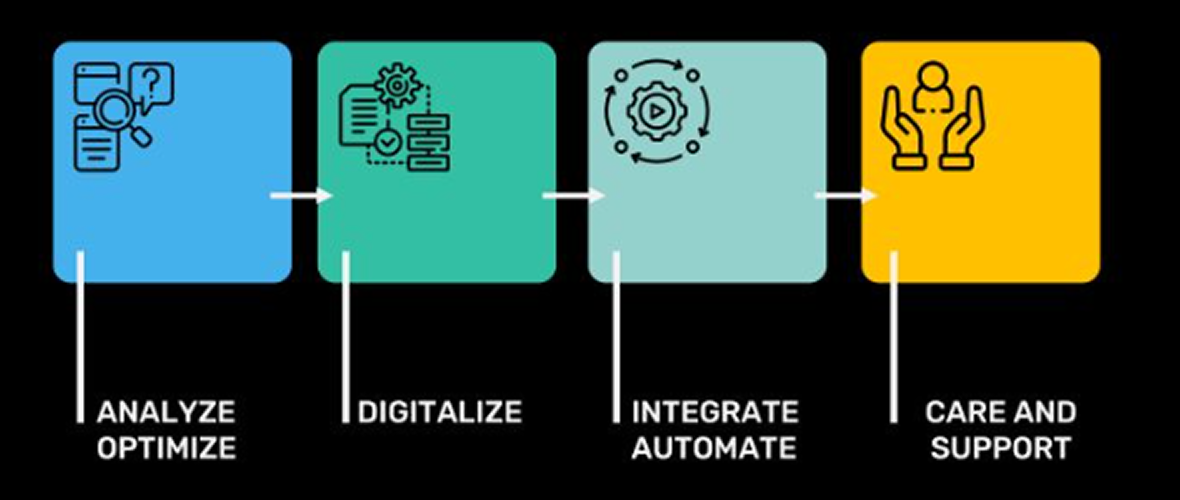
Here’s how we get it right from the start:
P.S. Want to dive deeper?
📌 Related post: "Bad Process + LIMS = Faster Bad Process"
Philipp's LinkedIn post on why automation without process maturity backfires.
📖 Related guide: Best Practices for Laboratory Management
Practical guidance for building a high-performing QC lab.
Happy & safe lab work!
❤️ Greetings,
1LIMS Team
Privacy is important to us, so you have the option of disabling certain types of storage that may not be necessary for the basic functioning of the website. Blocking categories may impact your experience on the website. More information