Outsourcing lab testing is common in manufacturing. Managing results across emails, PDFs, and multiple service labs is where it gets complicated. See how a LIMS helps you manage external tests automatically, using our process at 1LIMS as an example.

Manufacturers run billions of lab tests every year. The food safety sector alone sees 2 billion microbiological tests. That number keeps climbing by about 5–6% every year because of more products, more ingredients, and tighter regulations.
Keeping up with this volume calls for specialized equipment, validated methods, and trained staff…all costly to build and maintain. That’s why a large share of testing is outsourced to service labs. In microbiological pathogen testing, for example, external labs handle 60–70% of samples in Europe and North America.
Outsourcing solves the capacity problem, but it also creates a workflow one. Samples leave the building. Results come back from different labs, in different formats, on different timelines. QA teams are left to track status, re-enter data, and reconcile results.
This is where LIMS helps. Automating external testing is one of its core jobs. In this article, we show how manufacturers can connect a LIMS to Eurofins and other labs, using our workflow at 1LIMS as an example.

External service labs usually specialize in specific types of analyses, and most manufacturers do not rely on a single provider. Microbiology, chemical contaminants, environmental, and compliance tests often come from different labs, depending on the method, accreditation, and location.
Below, we compiled the list of most popular labs across the DACH region and globally and grouped them by their primary area of specialization.
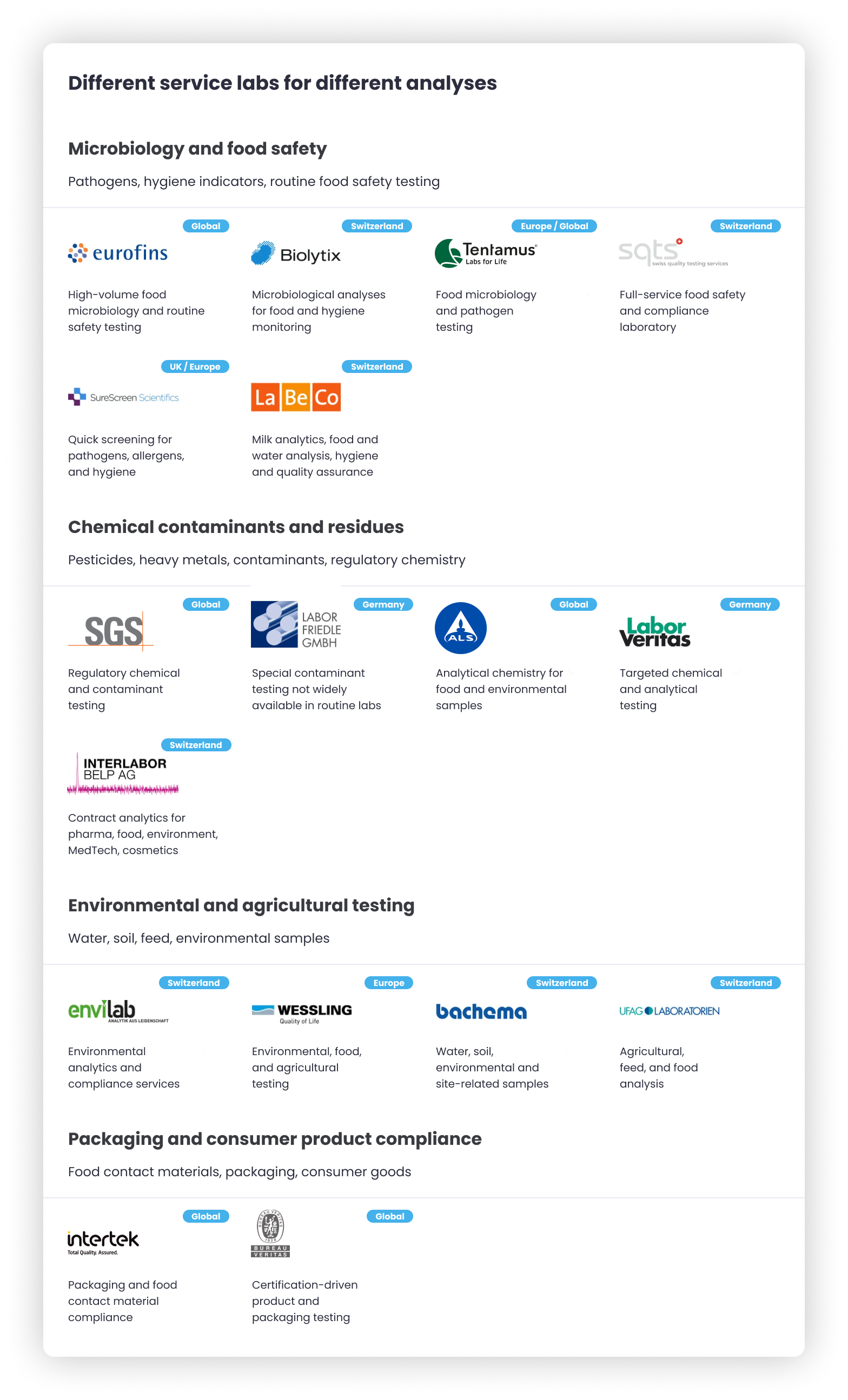
Working with multiple service labs is normal. The challenge is managing it without manual work.
To understand why this becomes a challenge in the first place, we need to consider how companies typically work with external labs today.
Micarna Group is one of Switzerland’s leading meat producers, with 4,500+ of products and 23 production sites across the country. The company operates a central quality control laboratory that processes 100–200 samples per day with a small team of technicians.
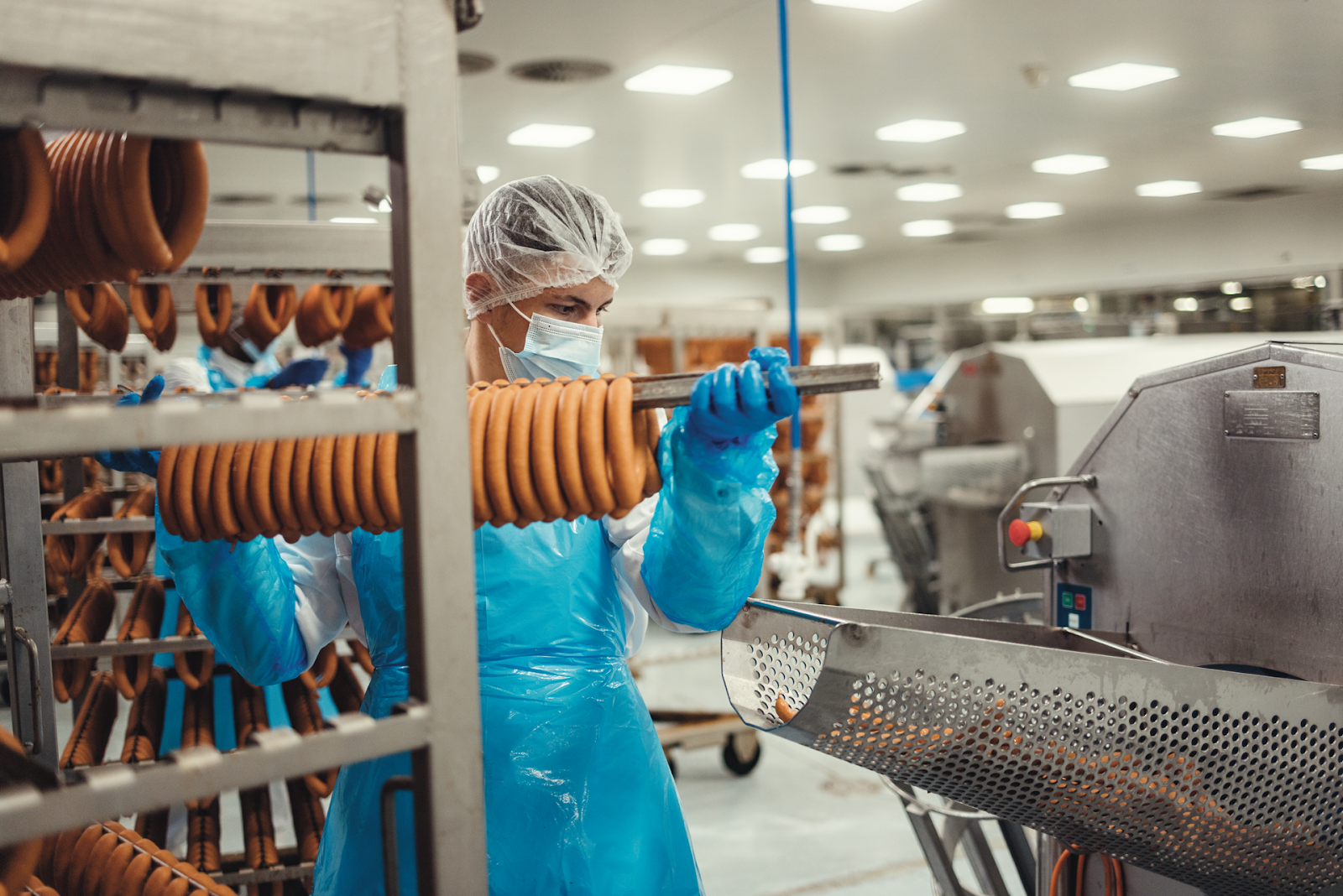
Most of their routine testing is done in-house. But for chemical analyses and selected microbiological tests, Micarna works with external service labs, as many manufacturers do.
In practice, this creates the following workflow:
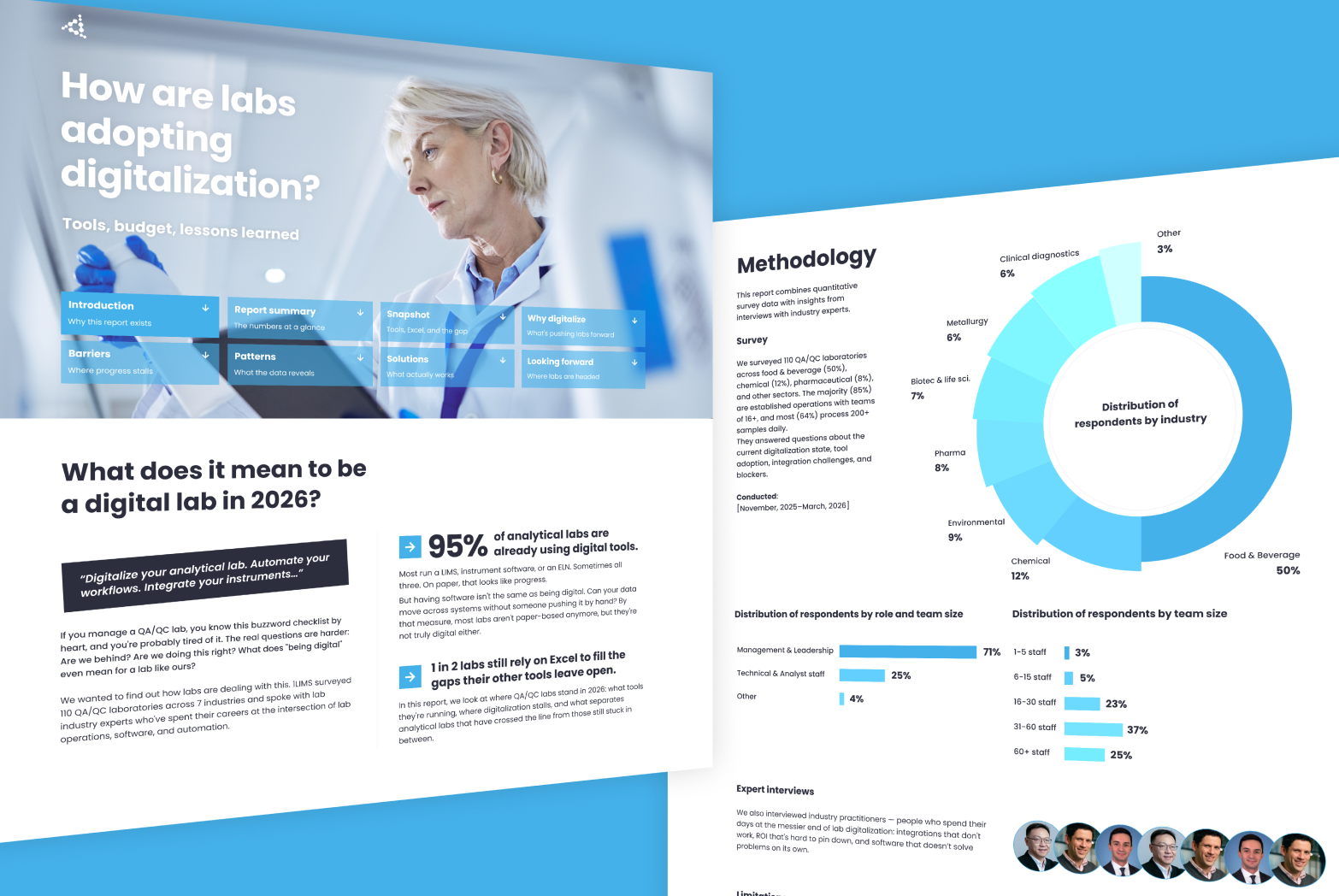
That’s where the work starts. Someone has to open each PDF, find the right values, and re-enter them into internal systems. If a result is missing or unclear, it means another email or phone call. If two labs report results differently, someone has to reconcile formats and units. This manual reconciliation is the norm across the industry. In our 2026 State of Lab Digitalization Report — a survey of 110 QA/QC labs — full instrument-and-software integration is rare: 1 in 10 labs. Even among labs already running a LIMS, 2 in 3 report integration gaps. For food and beverage labs specifically, transferring data from instruments and outside sources by hand was the #1 manual task, cited by 42%. This work can be removed fully with an integrated workflow.When QA needs to approve a batch, they’re often waiting on one last external result, somewhere in an inbox.
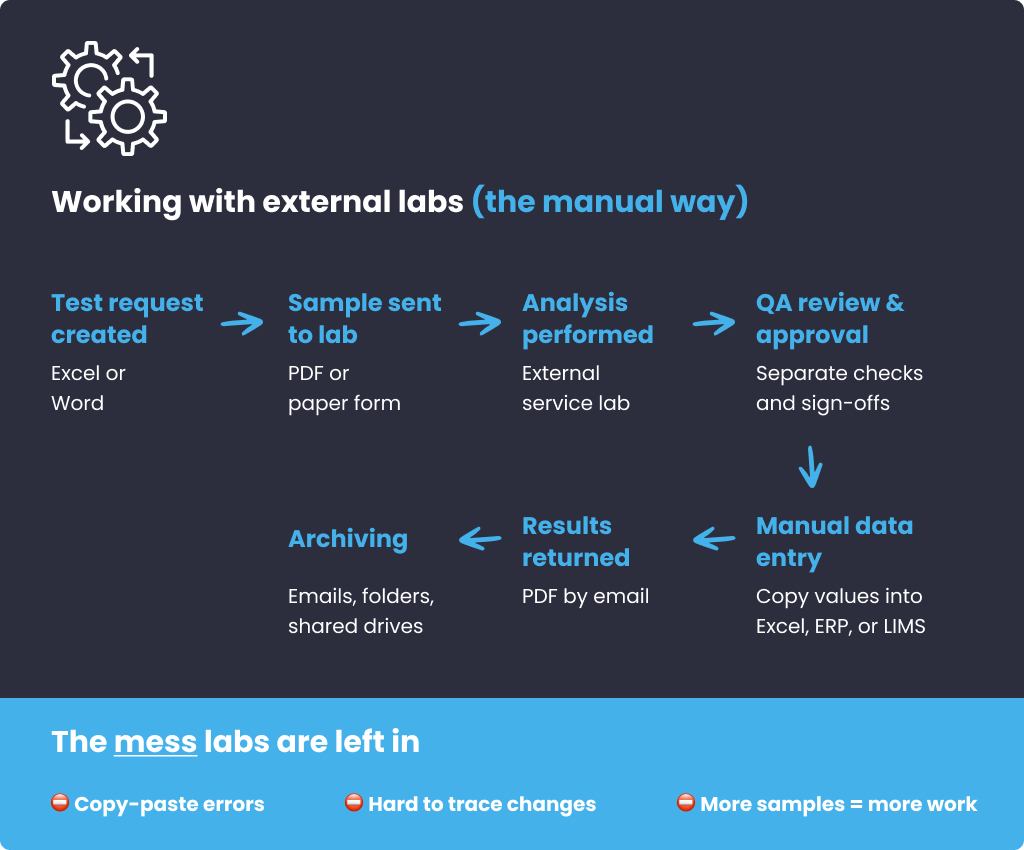
And since most manufacturers work with several service labs at the same time, these problems multiply quickly. This leads to a question:
How can outsourcing testing be brought into one digital workflow?
This is the gap between labs with software and labs that are actually digital. In our survey, 95% already use digital tools, yet only 1 in 5 consider themselves fully digital. The problem lies in the digitally-assisted middle, where the tools exist but the data doesn't flow between them. External lab results sitting in an inbox are the clearest example of data that doesn't move.
For organizations aiming to streamline lab workflows, integrating LIMS with existing laboratory processes typically takes anywhere from a few weeks to several months, depending on lab complexity, customization needs, and the legacy systems involved. Careful planning and collaboration between IT and laboratory staff are essential for minimizing disruption during LIMS implementation.
1LIMS supports integration with global service labs like Eurofins, SGS, and Tentamus, as well as local providers in the DACH region like SQTS and Biolytix. In practice, this means using your LIMS with SGS or other service labs as part of a single workflow rather than a separate process.
Here’s how to send test orders to service labs using a LIMS, using 1LIMS as an example.
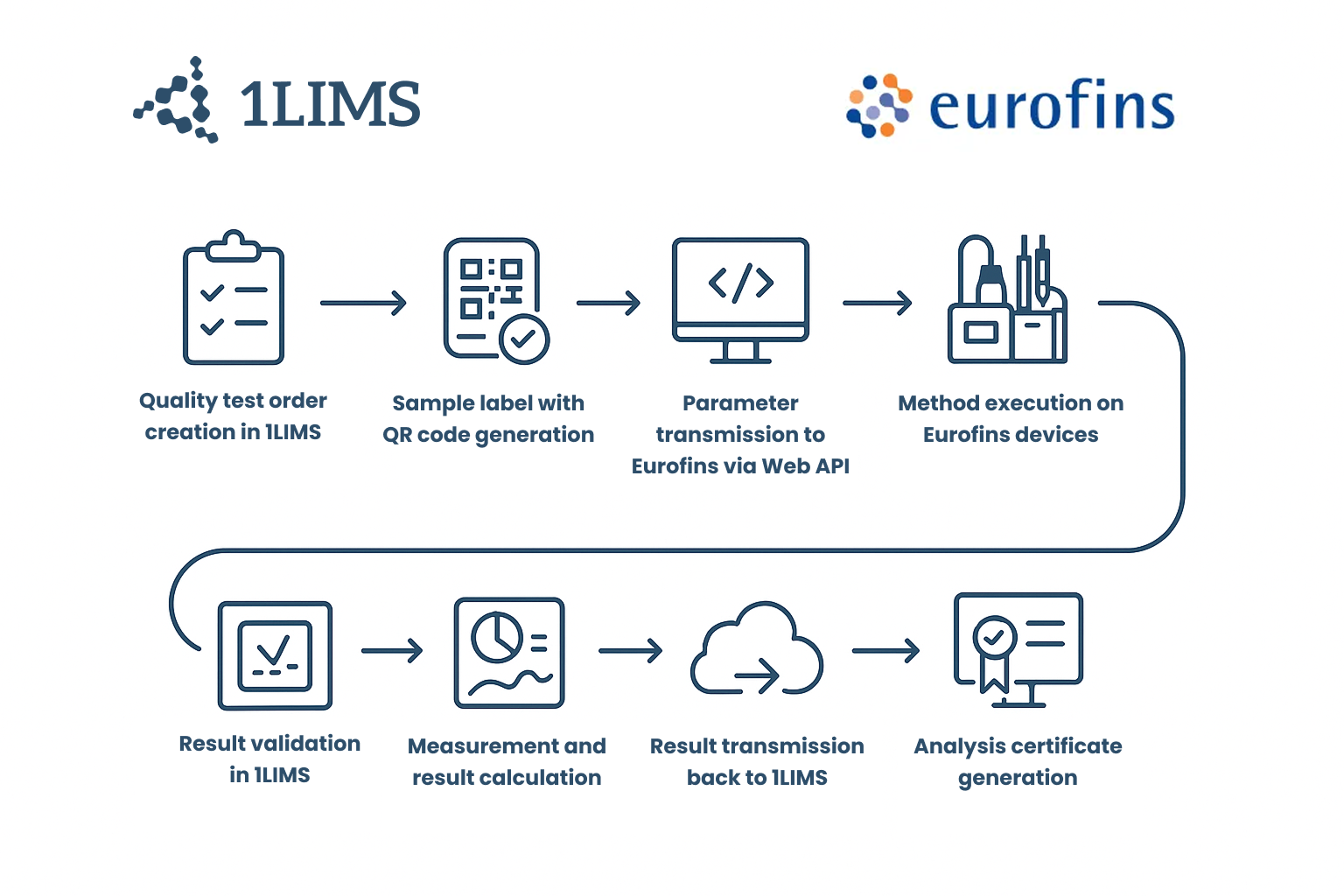
The workflow starts when you select an existing sample in 1LIMS or create a new one for a batch or lot. You then choose the required analysis (for example, a pathogen panel or a chemical screen) and select the external service lab that will run the test.
Depending on how your system is configured, 1LIMS can suggest the appropriate service lab based on the analysis or product, while still allowing the user to change it.
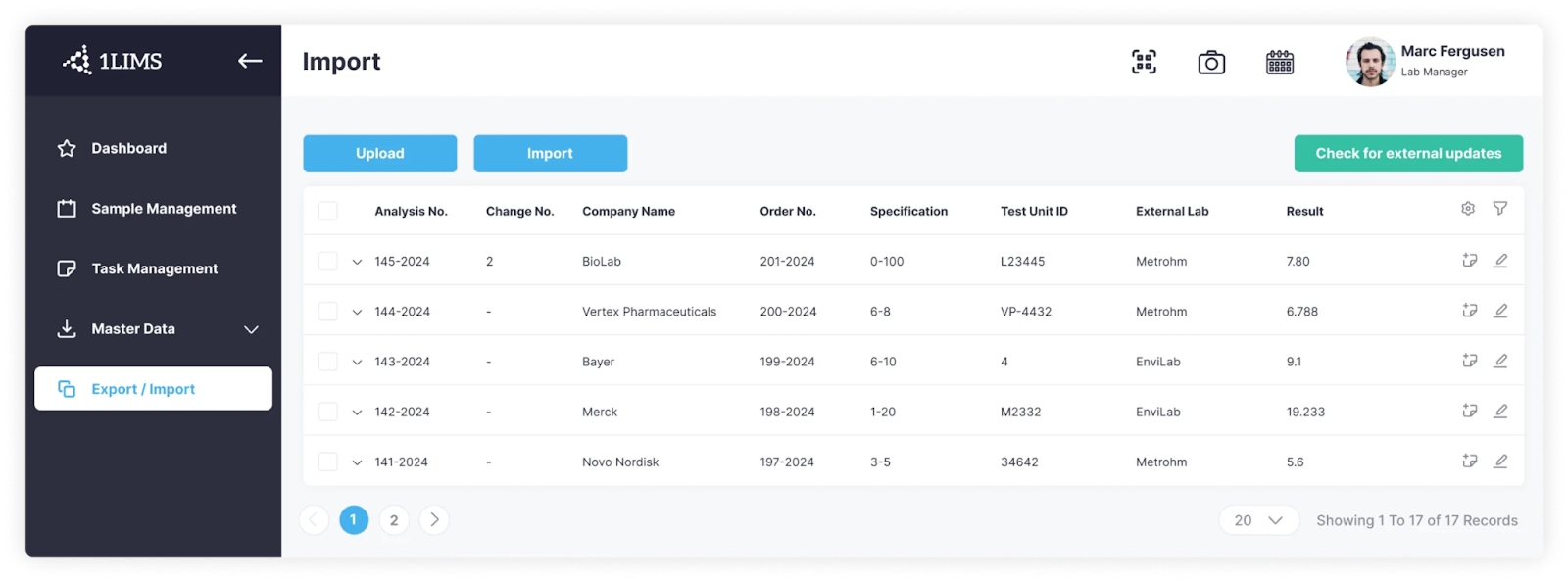
Based on the product and test type, 1LIMS automatically applies the required test parameters, limits, and units. The test order is linked directly to the sample from the start, so there is no separate request document to manage.
Each sample is then identified with a QR code that uniquely identifies the sample and links it to the test order in the system. When the code is scanned later, it immediately shows:
The sample stays identifiable even after it leaves your site.
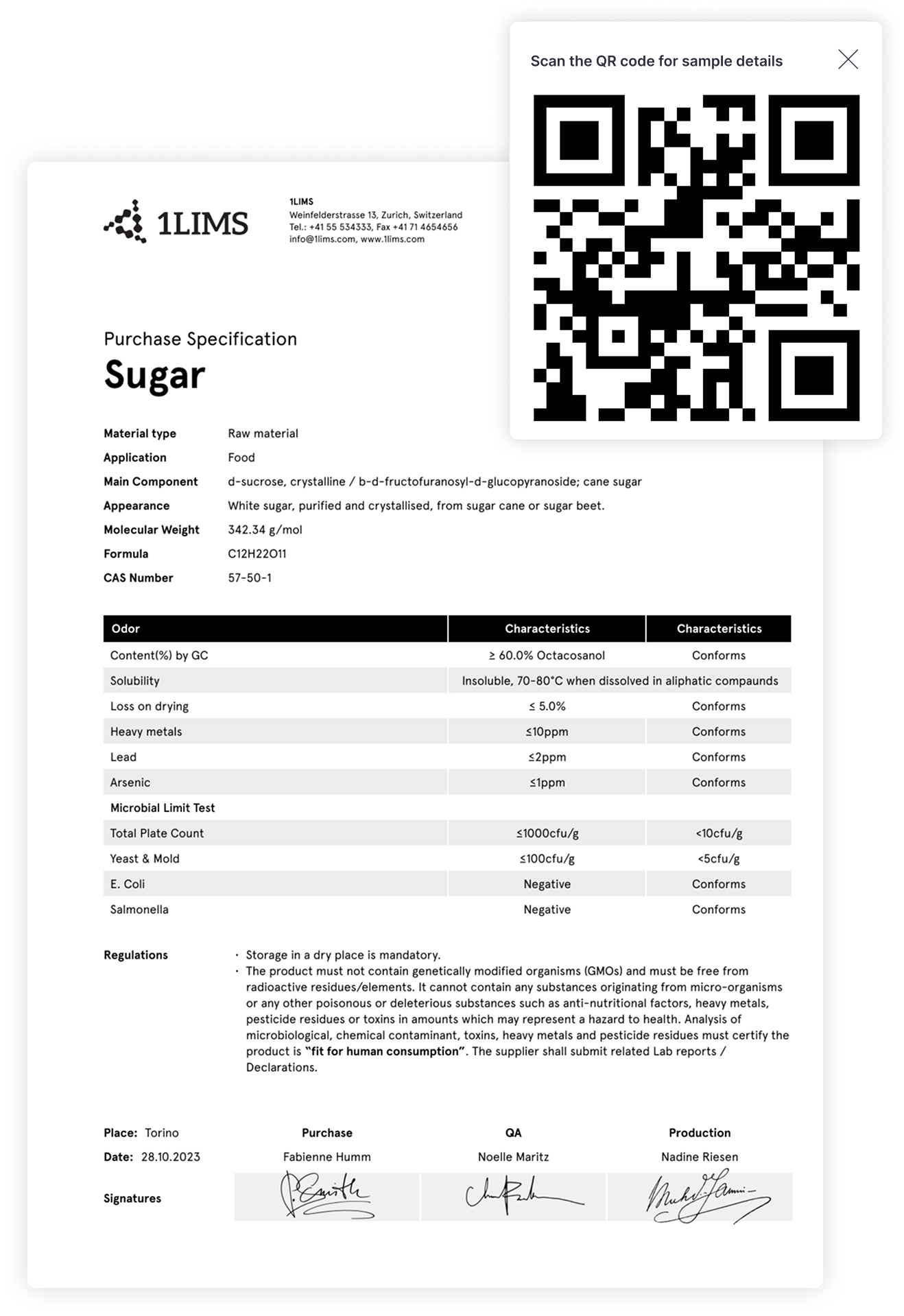
The sample is prepared for shipment as usual. In 1LIMS, the test order is marked as sent. The key difference is that the test order details are sent digitally, not as a PDF or in paper form.
The order status updates in 1LIMS, so QA can see that the sample has been sent and is being processed.
The test order remains visible with a clear status (for example: “in progress”). From the service lab’s perspective, nothing changes in how the test itself is done. From your perspective, the order remains visible and traceable while the analysis is in progress.
Results are sent back digitally and appear directly in the correct test order in 1LIMS. You don’t have to open PDFs, copy-paste values, and retype units or limits. Results are already linked to:
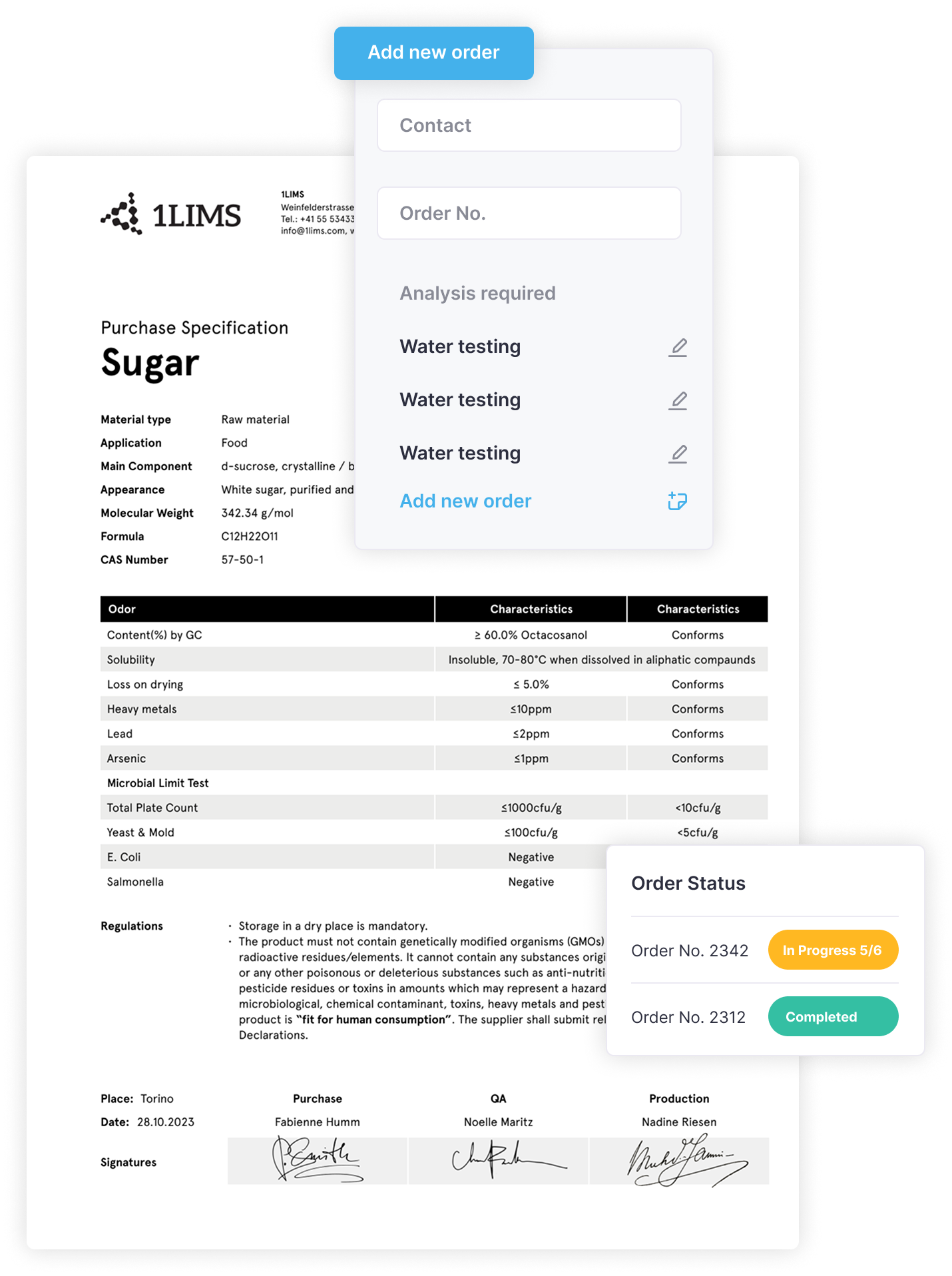
QA reviews and approves the results inside the LIMS. Certificates of analysis are generated automatically, and all related documentation is stored in one place. Every step, from test order creation to final approval, is traceable and audit-ready.
See also: How to integrate LIMS with your laboratory in 30 days
This is the same process used at Micarna Group. Micarna performs most testing in its own laboratory but relies on external service labs for chemical analyses. With 1LIMS, coordinating this external testing became part of a single workflow.
When orders were placed and samples arrived, Micarna’s Head Lab Manager, Stefania, could immediately see, just by checking the QR code, whether a sample was meant for internal testing or for an external lab. She could then view the order details in 1LIMS and prepare the sample for shipment without searching through files or spreadsheets.

When your LIMS needs to work with Eurofins, SGS, and others – choose 1LIMS
1LIMS provides a RESTful API that lets you integrate with the external service labs you work with, either using your own technical resources or with our implementation support.
Existing integrations with providers such as Envilab, SureScreen Scientifics, and Tentamus make it possible to send test orders and receive results digitally in one system.
Want to see how this could work in your lab? We can walk you through the process in a short demo.

Privacy is important to us, so you have the option of disabling certain types of storage that may not be necessary for the basic functioning of the website. Blocking categories may impact your experience on the website. More information